WHEN MIGHT IT HELP?
When is this considered?
- Heavy menstrual bleeding, pressure symptoms or pain associated with fibroids
- Fibroid-related symptoms confirmed by appropriate evaluation
- A shared discussion of fertility considerations and treatment alternatives
Assessment comes first
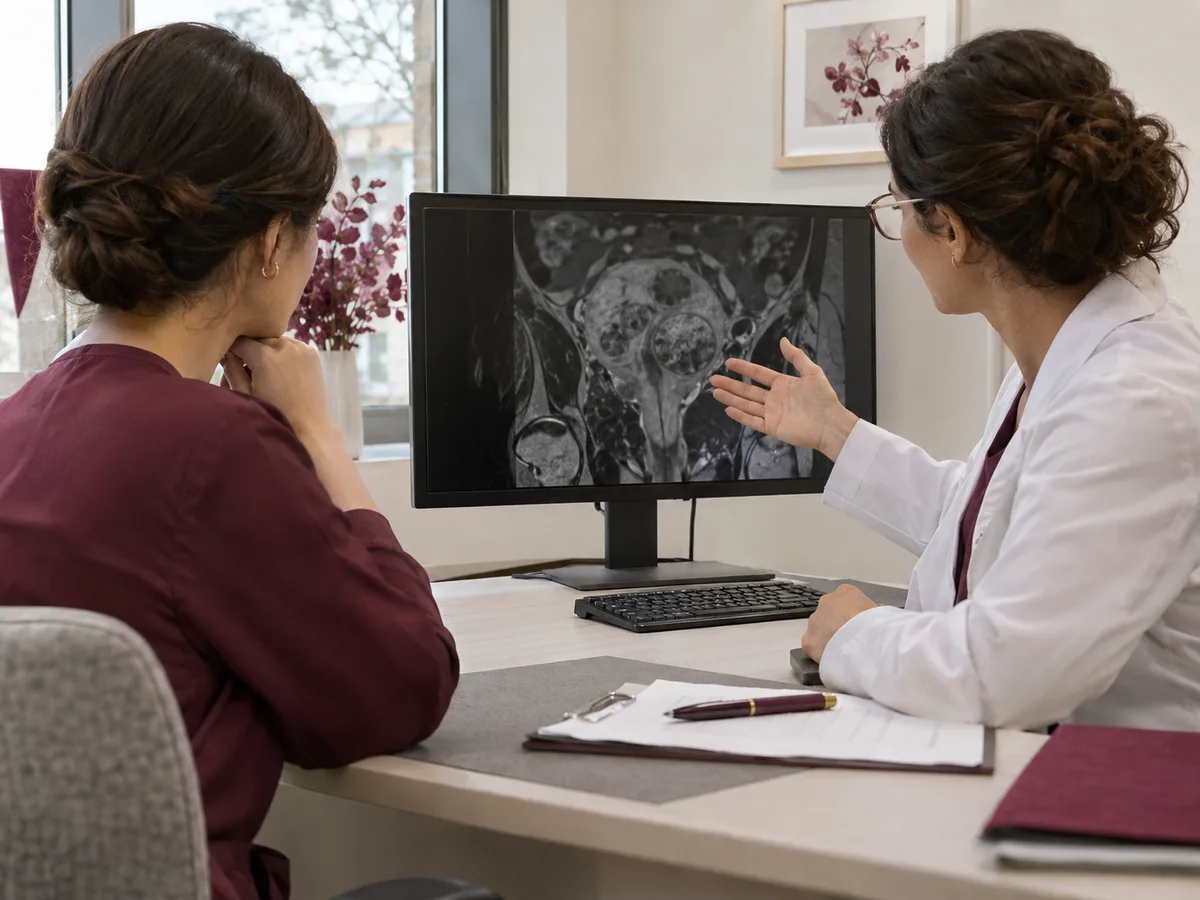
Assessment typically includes gynaecology input, pelvic imaging, bleeding history and discussion of treatment goals.
What might treatment involve?
A catheter is advanced through an artery under imaging guidance at a hospital, and particles are used to reduce fibroid blood supply.
What else could help?
Medication, hormonal options, myomectomy, hysterectomy and other approaches may be suitable.
Risks and limitations
Pain after treatment, infection, bleeding, ovarian effects, premature menopause, fibroid expulsion and incomplete symptom control are possible. Pregnancy-related considerations require special discussion.
Questions patients ask
Does UFE remove the uterus?
No. The uterus is generally preserved, although this does not mean it is the right option for everyone.
Can I choose UFE if I plan pregnancy?
Fertility goals materially affect treatment choice and need a detailed gynaecological discussion.
Treatment arrangements: Hospital-based angiographic procedure; consultation and coordination through JONNA CLINIC.
This page provides general information, not a diagnosis or a recommendation to undergo a procedure. Urgent or worsening symptoms should be assessed promptly by an appropriate medical service.