
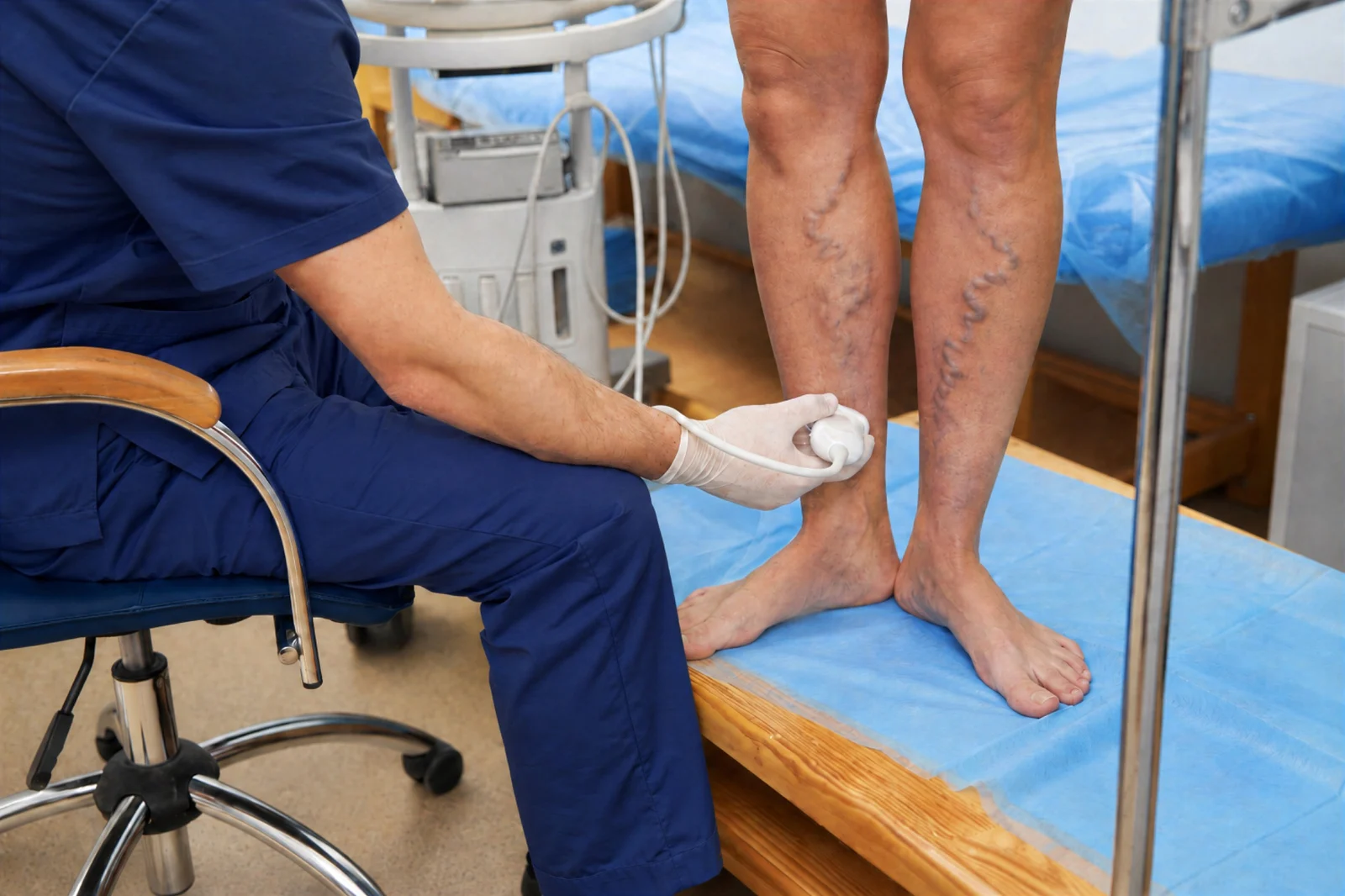
When is this considered?
- Leg heaviness, aching or swelling associated with visible veins
- Skin changes or other symptoms suggesting chronic venous disease
- A treatment decision following duplex evaluation
Assessment comes first
Assessment includes symptoms, examination, venous duplex findings, deep venous status and consideration of other causes of leg symptoms.
What might treatment involve?
Depending on vein anatomy and clinical suitability, treatment options may include endovenous laser ablation, medical adhesive (glue) closure, ultrasound-guided sclerotherapy or other venous interventions. The appropriate procedure and treatment setting are confirmed after assessment.
What else could help?
Compression, exercise, leg elevation, observation, other endovenous techniques or surgical referral may be suitable.
Risks and limitations
Bruising, discomfort, pigmentation, inflammation, nerve irritation, recurrent veins and, rarely, deep venous thrombosis or other complications can occur.
Questions patients ask
Do I need a venous Doppler before treatment?
A duplex ultrasound assessment is typically important to map reflux and plan appropriate treatment.
Will all visible veins disappear after one procedure?
Not always. Tributaries and residual veins may need staged treatment, and recurrence can occur.